
Meet the World’s New Universal Reuse Symbol
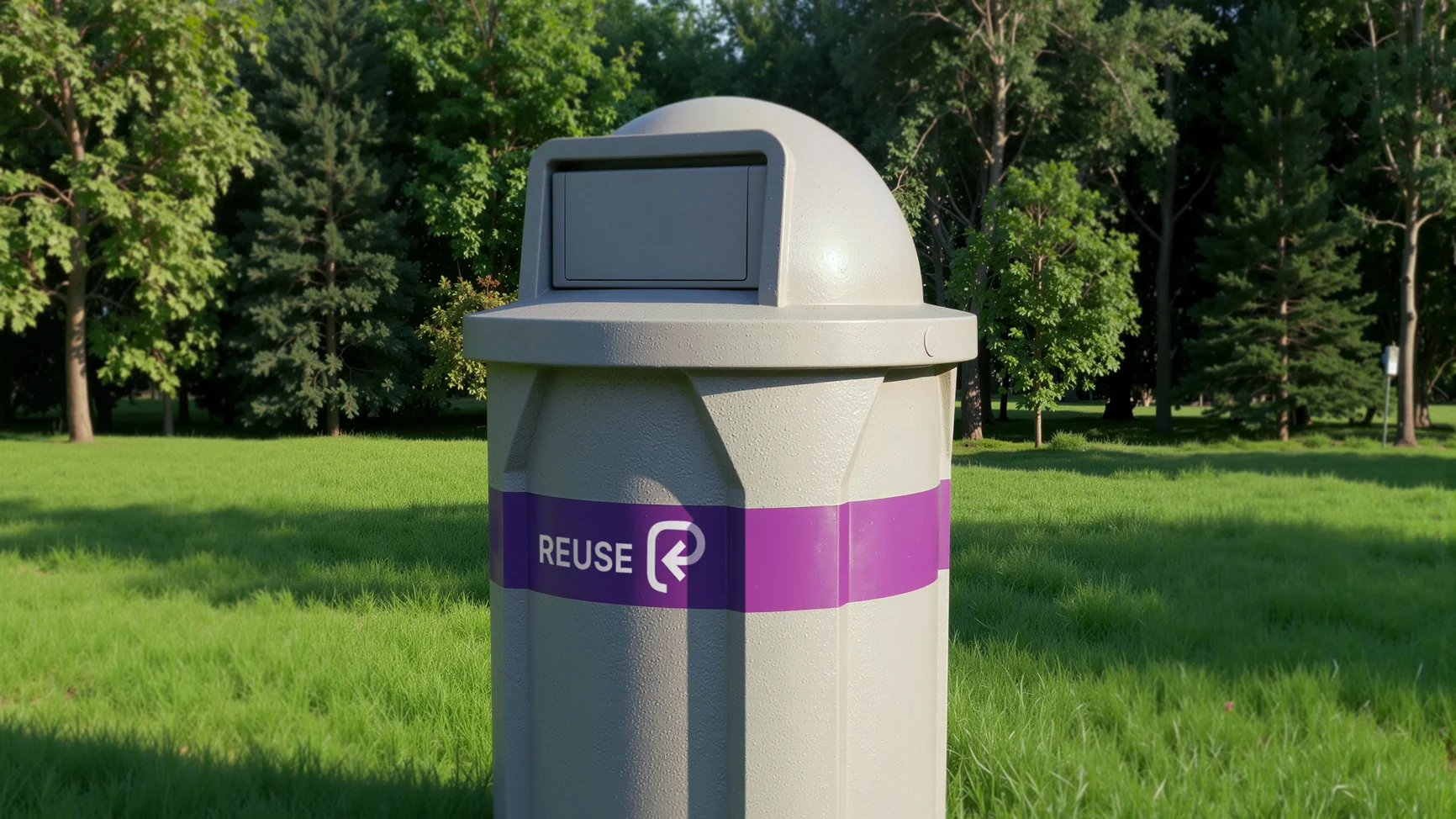
Photo by PR3
For decades, we have been conditioned to look for the "chasing arrows" Möbius loop on the back of our plastic containers. We toss them into the blue bin, cross our fingers, and hope for the best. But let’s face the cold, hard data: only about 9% of plastic waste actually gets recycled. The rest ends up in landfills, incinerators, or scattered across the environment.
Recycling alone cannot solve the single-use plastic and climate crises. To build a truly circular economy, we have to transition from a "throwaway" culture to a reuse economy.
A major barrier to this transition has been the lack of a unified visual language. How do consumers know if a cup, bottle, or container is meant to be tossed, recycled, or returned to a sophisticated washing and refilling loop?
Enter PR3: The Global Alliance to Advance Reuse. On June 3, 2026, PR3 officially unveiled a brand-new, universal reuse symbol. Designed to be as iconic and recognizable as the recycling logo, this bright purple mark is set to fundamentally reshape how we handle packaging waste.
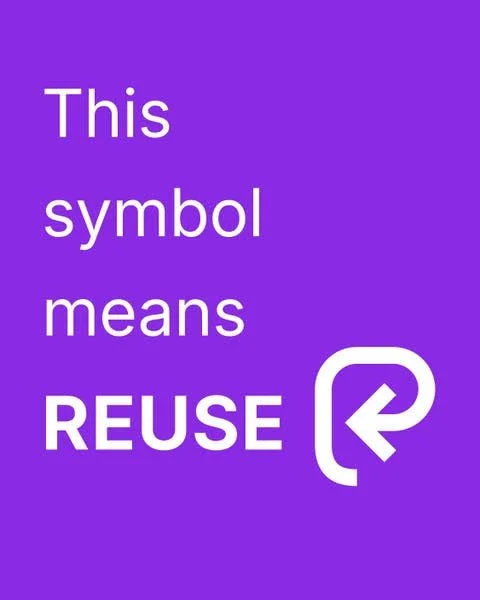
Photo by PR3
Who is PR3?
Before diving into the design, let’s talk about the driving force behind it. Founded in 2019 under the sustainability non-profit RESOLVE, PR3 is an international coalition of businesses, governments, NGOs, designers, and reuse operators.
PR3 doesn't just advocate for reuse; they build the operational blueprints for it. Accredited as a standards developer by the American National Standards Institute (ANSI) and collaborating with the CSA Group, PR3 creates the foundational, "behind-the-scenes" rules that allow reuse systems to scale. Their standards ensure that various brands and cities can seamlessly share infrastructure like collection bins, digital tracking networks, and industrial washing hubs.
The Story Behind the Purple "R" Spiral
The new universal symbol wasn’t just whipped up by a corporate marketing team overnight. It is the result of Rebrand Reuse, a year-long global design initiative launched in 2025 by the PR3 Global Standards Panel.
The initiative issued an open call that drew 236 submissions from 29 countries across nearly every continent. The winning design was created by Nicole Ascanio Rodriguez and Juan Navarrete, co-founders of Epigrama Studios based in Bogotá, Colombia.
Deep Meaning in a Simple Graphic
According to the designers, the symbol is a deliberate departure from the linear timeline of modern consumerism. Juan Navarrete notes that the spiral draws inspiration from Global South philosophies, which view time and resources not as a straight line, but as something that naturally returns to its origin.
Rigorous Market Testing
To ensure the logo would actually work in the real world, it underwent strict legal vetting and multiple rounds of global market testing. PR3 evaluated the design with 1,275 respondents across 17 countries. The panel looked for key characteristics:
Distinctiveness: It needed to be entirely separate from the standard recycling loop so consumers wouldn’t get confused.
Memorability: It had to stick in the human brain after a single glance.
Cultural Adaptability: It needed to carry the same intuitive meaning whether it was viewed in Seattle, Singapore, or Cairo.
It’s a System, Not Just a Package
One of the most innovative aspects of this symbol is that it does not signify a standalone product. You won't find it on a standard, store-bought reusable water bottle or a canvas tote bag that you bring from home.
Instead, use of the symbol is legally tied to strict criteria outlined in the upcoming PR3 Marking & Labeling Standard. A brand or venue can only display the purple spiral if the item belongs to an integrated, operational ecosystem.
"Reuse systems keep a package in circulation, from 10 to up to 100 uses, before it is finally recycled... The PR3 Global Standards for reuse and the new symbol give people a clear way to recognize reuse systems—and trust them." — Amy Larkin, Co-Founder and Director of PR3
To combat greenwashing, the symbol can only be deployed if the packaging operates within a system that includes:
Collection & Transport: Clear return infrastructure (like specialized drop bins).
Sorting & Industrial Washing: Certified sanitization processes that meet local safety and PR3 cleanliness standards.
High Durability: Containers designed to withstand a verified minimum number of wash-and-use cycles without degrading.
The Global Rollout: Where Will You See It?
The symbol is already moving from a concept to the real world. Because a standardized visual language makes it easier for mass venues to manage inventory without changing consumer habits too drastically, stadiums, concert halls, and festival grounds are the initial proving grounds.
For instance, companies like Bold Reuse and Solo Cups are launching the mark across US stadiums and cities, while international operators—such as Huskee in Australia, Muuse in Canada and Asia, and Re-Universe in the UK—are integrating the logo into everyday cafe networks and circular distribution systems.
Beyond cups and stadium foodware, the rollout will expand over the next few years into wine and beverage bottles, homecare and cleaning product containers, logistics vehicles, and community collection bins. According to reporting by Fast Company, artists are even starting to write reuse mandates into their concert tour riders, guaranteeing the purple symbol will be front and center for millions of music fans.
How We Can Help Support the New Symbol
The success of a universal symbol relies entirely on public adoption and cultural familiarity. Behavioral science shows that we rely heavily on visual shortcuts to make quick decisions. Here is how you can help turn this purple spiral into the new global benchmark for sustainability:
Look for the Purple Spiral: Next time you are at a concert, sporting event, or cafe, check your foodware. If you see the purple "R" logo, look for the matching purple collection bin instead of throwing it in the trash or a standard recycling box.
Participate Authentically: Remember that a reuse system only works if the container is returned. Holding onto a reusable stadium cup as a souvenir actually breaks the loop! Return it so it can be washed and reused up to 100 times.
Advocate Locally: Ask your local coffee shops, university campuses, or corporate offices if they are looking into PR3-compliant reuse systems. Point them to resources provided by the Food Packaging Forum to understand the safety and efficiency standards.
Demand Accountability: Use your voice on social media to praise brands that adopt the PR3 symbol and call out those using vague "reusable" claims without providing an actual collection and washing network to back it up.
Designing Waste Out of the Picture
The recycling loop defined an era focused on managing waste after it was already created. The new PR3 reuse symbol aims to define a future where we design waste out of the system entirely. By reducing single-use packaging production by up to 90% and cutting carbon emissions by up to 80%, this little purple arrow holds massive promise.